Houston-Based. Nationwide Service.
Houston-Based. Nationwide Service.
If your logo only exists as a JPG or PNG, every printer, sign shop and embroiderer will eventually ask for something you do not have. We rebuild it as true vector artwork — drawn by hand, not auto-traced — so it works at any size, in any process.
The distinction is simple once you see it. A raster file records colour values in a fixed grid. Enlarge it and the software invents intermediate pixels, which is why edges soften and the logo looks fuzzy on a banner. A vector file records instructions — a curve of this shape, from here to here, filled with this colour. Those instructions are resolution-independent, so the same file renders crisply on a business card and across the side of a building.
Conversion is not redesign, and the difference matters commercially. Conversion reproduces your existing mark faithfully in a better format. Nothing about the design changes; the shapes are simply rebuilt properly. If the design itself needs improving, that is separate work with a separate decision behind it.
The other thing conversion produces is independence. Once you hold an editable vector master, any designer can adjust it, any printer can output it, and you are no longer reliant on whoever happens to have the original artwork — which, for a lot of businesses, is a former supplier they lost touch with years ago.
The most common trigger. You sent a PNG and were told it will not work, usually with a deadline already in place.
Fine on a website header, soft on a banner, unusable on a sign. The file is doing exactly what raster files do.
The designer moved on, the agency closed, or the files were on a laptop that died. All that survives is an image pulled off your own website.
Both processes require clean vector outlines. Neither can work from a photograph of a logo.
Franchise systems, marketplaces and supplier portals often mandate AI, EPS or SVG specifically.
A hand drawing, a photo of existing signage, or an old letterhead scan can all be rebuilt into usable artwork.
This problem is almost never discovered gradually. It arrives as a single email: the printer, the wrap shop or the embroiderer has looked at your file and cannot use it. Until that moment the logo had been working fine, because everywhere it had been used was small and on a screen.
The usual first response is to send a bigger version of the same image, which does not help. Resizing a raster file upward adds pixels without adding information — the software is guessing what belongs between the pixels it already has. The result is larger and softer, not sharper.
The second response is to run it through an online auto-tracer. This is genuinely tempting because it is instant and often free. It produces a file with a vector extension, and it will frequently be rejected anyway, because auto-tracing reproduces every artefact in the source at higher fidelity: compression noise becomes lumpy edges, straight lines acquire slight waves, and corners that should be sharp get rounded.
Manual redraw solves it properly. A designer rebuilds each shape deliberately, deciding what the curve was meant to be rather than inferring it from a degraded image, and the output is artwork any supplier can work with.
If the logo you are converting was produced by an AI generator, it usually needs more than a format change — approximated lettering and unmanufacturable detail are covered on our AI logo refinement page.
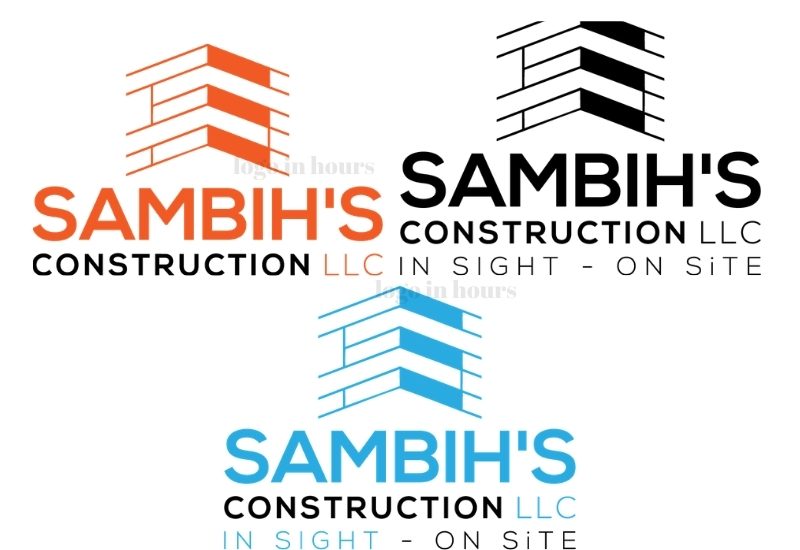
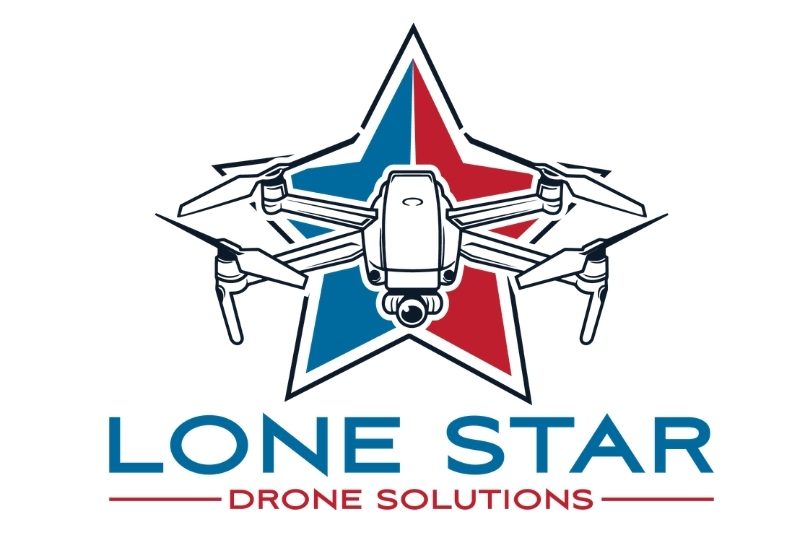
Examples of the construction standards applied when marks are rebuilt as vector: minimal anchor points, true curves, defined colour, and variants built for real production processes.
One file for a favicon and a billboard. Enlarging never degrades it, because there are no pixels to stretch.
Printers, sign makers, embroiderers and wrap shops all work from vector. Supplying it removes an entire category of delay.
Any designer can open and adjust the master. Colour changes, new lockups and future variants stop being rebuild projects.
Sampled approximations are replaced with defined values a printer can match across processes and runs.
An SVG of a logo is typically a fraction of the size of a high-resolution PNG, and stays sharp on every display.
You own the master. Nobody else controls whether you can reproduce your own logo.
Most confusion about logo files comes from treating all image formats as interchangeable. They are not, and knowing which does what saves a lot of back-and-forth with suppliers.
Lossy compression, no transparency. Every save degrades it slightly and creates compression noise around sharp edges, which is exactly what a logo is made of. Acceptable as a final export, never as a master.
Lossless with transparency support, which is why it is popular for logos on the web. It is still a fixed grid of pixels, so it still fails when enlarged past its native size.
Resolution-independent, small, and sharp on any display. Excellent for websites and apps. Not always what a commercial printer wants, but increasingly accepted.
Long-established vector format that virtually every printer, sign shop and embroidery digitiser can open. Frequently the specific file a supplier is asking for.
Adobe Illustrator's native format, where layers, effects and construction are preserved. This is the file you should hold as the source of record.
Can carry full vector data while opening on any machine. A vector PDF is often the easiest single file to hand a supplier who has not specified a format.
If, once converted, the design itself still looks dated rather than merely low-resolution, that is a different decision — modernizing the mark is separate work from rebuilding the file.
The highest-resolution version you have, whatever it is — a website export, a print scan, a photo of a sign, even a sketch.
We tell you whether the source supports faithful reconstruction, and flag anything ambiguous, such as detail too degraded to read confidently.
Where the mark contains type, we identify the typeface or the closest available match, and rebuild the lettering properly rather than tracing its outline.
Each shape is reconstructed as true curves with as few anchor points as the form needs. Nothing is auto-traced.
Colours are sampled, then defined as reproducible values rather than left as approximations pulled from a compressed image.
Checked at small size, in one colour and reversed, then supplied in the full format set.
The editable Adobe Illustrator source, layered and properly constructed.
The format most printers, sign shops and embroidery digitisers request first.
For web and app use — sharp on every display and light on page weight.
The safest single file to send a supplier who has not specified a format.
Transparent and flat raster exports for everyday digital use.
Full colour, one colour and reversed, in horizontal and stacked lockups.
Conversion starts from $125 with nothing paid upfront, and it is usually the least expensive service on this site because the design decisions are already made.
Complexity drives the figure. A wordmark in a recognisable typeface with two flat colours is straightforward. A detailed illustrative emblem with gradients, overlapping elements and fine internal texture takes considerably longer to rebuild accurately. The quality of your source matters too: a clean 2000-pixel PNG supports faster, more confident reconstruction than a blurry photograph of a van door.
It is worth weighing this against the alternative. Suppliers who redraw artwork themselves often charge for it, and you do not get to keep the file — so you pay again the next time a different supplier needs it. Converting once and owning the master ends that cycle.
Our pricing page covers how conversion compares with design work across the range.
Simple conversions are frequently completed within a day, and often faster. There is no concept stage and no exploration — the design already exists, so the work is reconstruction rather than invention.
Complex illustrative marks take longer, and marks where the source is badly degraded take longer still, because ambiguous areas need to be resolved with you rather than guessed. If your source is poor, expect one round of questions about what a particular detail is supposed to be.
Where a supplier deadline is already fixed, same-day turnaround sets out what can realistically be completed inside one working day.
Auto-tracing is fast and sometimes free, which is why most people try it first. Here is what actually differs once the file reaches a supplier.
| Automatic Trace | Professional Redraw | |
|---|---|---|
| How shapes are made | Algorithm guesses edges from pixels | Designer draws each curve deliberately |
| Anchor points | Hundreds, often thousands | As few as the form requires |
| Compression noise | Reproduced faithfully as lumpy edges | Removed; the intended shape is rebuilt |
| Straight lines | Frequently slightly wavy | Actually straight |
| Corners | Rounded or ragged | Sharp where they should be |
| Text | Outlined shapes that resemble letters | Real typography, correctly spaced |
| Colour | Dozens of sampled near-duplicates | Small defined palette |
| Editability | Technically editable, painful in practice | Clean and straightforward to adjust |
| Supplier acceptance | Often rejected or reworked | Ready as supplied |
Resolution and format are different things. A 5000-pixel PNG is still raster and will still be refused by a supplier who asked for vector.
If nobody redrew it, the flaws are still there — just now stored as thousands of anchor points instead of pixels.
People often send a website favicon because it is easiest to find. Always send the largest and cleanest source available; it directly affects accuracy.
“Vector” is a category, not a format. Ask whether they want EPS, AI, PDF or SVG before the work starts.
If the mark is genuinely dated, conversion faithfully preserves a dated logo in a better file. Decide which problem you are solving.
Store the AI or EPS file somewhere you will still have access in five years. Losing it is how most businesses end up needing conversion in the first place.
Vehicle lettering and site signage both demand cuttable vector outlines.
Awnings, menu print runs and packaging all need scalable artwork.
Bags, labels, window vinyl and interior signage from one master.
Equipment marking, etching and technical documentation.
Embroidery on kit and apparel needs a proper one-colour version.
Yard signs and brokerage systems with strict file requirements.
Suite signage, directories and patient-facing print.
Event banners, merchandise and donor materials at every scale.
If the conversion reveals that the underlying mark is not worth preserving, designing an original logo may be the better investment — we will say so if that is our honest read.
Logo In Hours LLC is Houston-based and works with businesses nationwide. Conversion is entirely file-based, which makes location irrelevant: you send a source image, we send back an assessment, and the finished artwork is delivered digitally.
If your supplier has a written specification, forward it with your source file and we will match it exactly rather than guessing what they meant.
Manual reconstruction on every job. We do not auto-trace and call it conversion.
Lettering is set in real typefaces, not outlined from a blurry image.
AI, EPS, SVG, PDF plus raster exports, in a full variant set.
The editable source is yours, ending the cycle of paying to redraw.
Logo In Hours LLC is a Houston-based logo and graphic design company serving clients nationwide. Conversion work is done manually in professional vector software, with typefaces identified and reset rather than traced as shapes.
A useful question to ask any supplier offering this service is simply whether they redraw or vectorize. The answer tells you what you will receive. We will also tell you when your source is too degraded to reconstruct confidently — in which case some detail is a judgement call, and you should know which parts were interpreted rather than copied.
It means rebuilding your logo out of mathematically defined shapes instead of pixels. The result scales to any size without quality loss, can be edited by any designer, and is accepted by printers, sign makers and embroiderers.
Yes. Those are the two most common source files we receive. The mark is manually redrawn rather than auto-traced, so the result is clean rather than a high-fidelity copy of the compression artefacts.
Those tools auto-trace, which reproduces every flaw in the source and creates files with thousands of unnecessary anchor points. They frequently get rejected by the same supplier who asked for vector in the first place.
That is the objective of conversion. Shapes are reconstructed faithfully and lettering is rebuilt in matching type. If you also want improvements, say so — but that is a redesign decision, not a conversion one.
Usually still workable. Where detail is too degraded to read confidently we will ask you rather than guess, and we will tell you which areas were interpreted.
Yes. Colours are sampled from your source and then defined as reproducible values. If you already have brand colour references, send them and we will use those instead of sampling.
Ask your supplier, because it varies. EPS is the most widely requested for print and signage, SVG for web, AI as your editable master. You receive all of them, so you are covered either way.
Yes. Sketches, scans and photographs of existing signage can all be rebuilt. A sketch is often a cleaner starting point than a compressed digital image.
Vector artwork is what an embroidery digitiser needs to work from. We also supply a proper one-colour version and simplify detail that thread genuinely cannot hold.
From $125 with nothing upfront. It is typically the least expensive service here, because the design decisions have already been made. Complexity and source quality determine where a specific job lands.
Simple conversions are often done within a day. Complex illustrative marks, or badly degraded sources that need clarification, take longer.
Yes, including the editable master. That is much of the point — you stop depending on any single supplier to reproduce your own logo.
Often not on its own. Generated marks usually also have approximated lettering and detail that cannot be manufactured, which needs refinement rather than a straight format change.
Attach the largest version of your logo you can find, and tell us what your printer or supplier asked for. You will get an assessment of what can be reconstructed, what it costs, and the full format set once it is rebuilt.
Free Consultation • No Upfront Charge