Houston-Based. Nationwide Service.
Houston-Based. Nationwide Service.
Work directly with an experienced graphic designer in Houston and across Texas for same-day graphic design and full branding — business cards, flyers, brochures, banners, packaging, presentations, social media graphics and more — or turn AI-generated graphics into polished, high-resolution artwork. Every file is prepared in high resolution for its exact printer, platform or production process, with nationwide delivery and nothing paid upfront.
From small businesses and startups to established companies and corporate brands, more organizations are using AI to explore visual ideas and generate early concepts. But AI-generated artwork almost always needs professional refinement before it can represent a business or go to commercial print. Our Houston-based graphic designers — serving clients across Texas and nationwide — take AI to high-resolution graphic design seriously: we rebuild layouts, typography, colour, spacing and image quality, recreate low-resolution AI artwork as clean, scalable vector graphics, and prepare high-resolution JPG, PNG, AI, SVG and PDF files for websites, social media, business cards, packaging, signs, apparel, vehicle graphics and large-format printing. Whether you start from an AI-generated idea, a rough sketch or an existing design that needs improvement, we turn it into polished, production-ready artwork built for real-world use.
A good design must look professional on screen and reproduce correctly in print. We prepare your files with the proper resolution, color mode, bleed, trim area, safe margins and font settings required by your printer or production company.
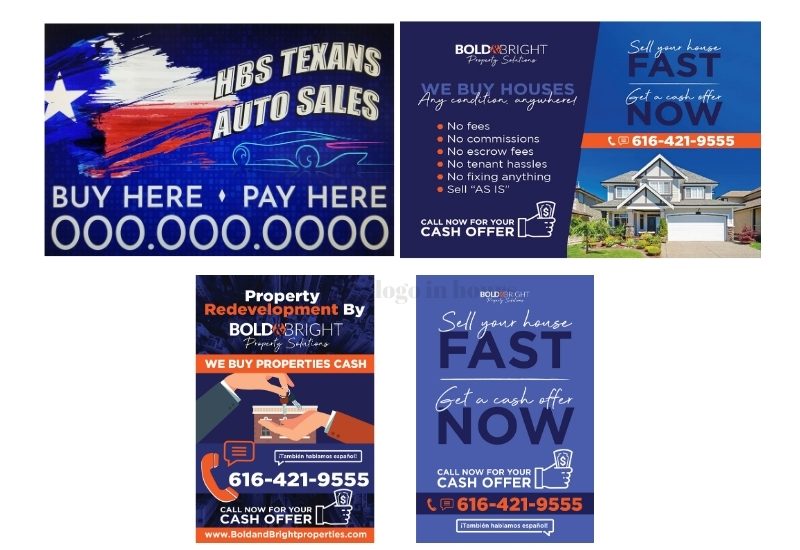
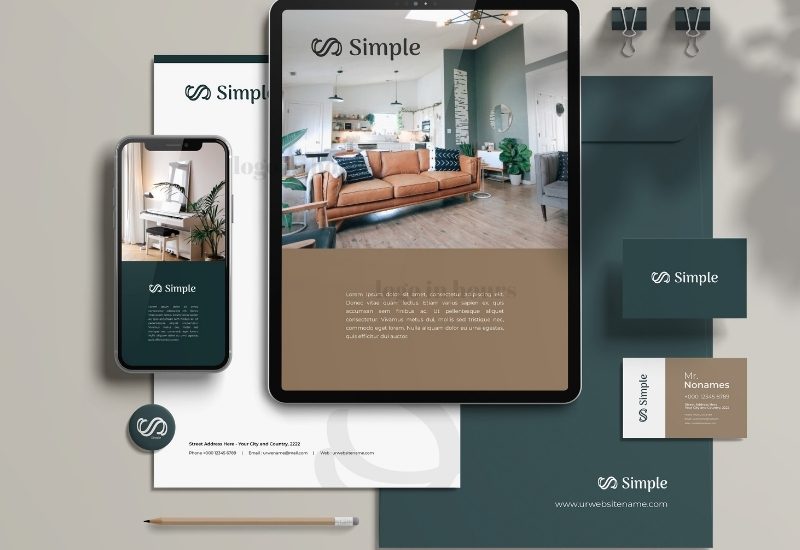
Examples across print and digital showing how a single type and colour system carries through different pieces. Shown to demonstrate approach rather than to claim specific clients. More than attractive graphics—work with a graphic designer near me who helps your business look established and grow.


Estimate templates, door hangers, site boards and vehicle graphics.
Menus, packaging, table material and delivery-platform imagery.
Patient forms, appointment cards, practice signage and referral leaflets.
Listing sheets, brochures, open-house boards and personal marketing.
Labels, inserts, packaging and marketplace imagery.
Proposals, capability statements, reports and conference material.
Class schedules, membership material, apparel and window graphics.
Event material, donor packs, annual reports and campaign graphics.
If what you are really after is the underlying system — colour palette, typography and usage rules that make every future piece consistent — that is brand identity design, and it usually pays for itself by the third project. A live graphic designer near you for business cards, flyers, brochures, banners, packaging, presentations, and social media.
From one-time marketing materials to complete coordinated campaigns, we create professional designs that look connected, communicate clearly and meet the correct production requirements.
Professional cards, letterheads, envelopes, invoice templates and branded business documents.
Clear, engaging layouts designed to present your services, offers and important information effectively.
High-resolution artwork prepared for banners, storefront signs, trade-show displays and large-format printing.
Custom labels, boxes, hang tags and packaging artwork created around the printer’s dieline and specifications.
Branded posts, advertisements, covers, profile graphics and reusable templates sized for each platform.
Professional presentations, proposals, capability statements, reports and marketing documents.
Scalable vector artwork prepared for vehicle wraps, lettering, window vinyl and contour cutting.
Organized, easy-to-read menus, service lists, catalogs and promotional materials.
From rough ideas to production-ready files, our graphic designer service brings your vision to life.
We transform rough AI concepts into polished, professional designs aligned with your business and audience.
We redraw blurry or low-resolution graphics as scalable AI, SVG, PDF, PNG, and JPG files for digital and print use.
A live designer corrects awkward text, inconsistent colors, poor spacing, and visual hierarchy that AI frequently misses.
We apply the same logo, fonts, colors, and design style across business cards, brochures, packaging, signs, presentations, and social media.
Every file is correctly configured for websites, commercial printing, apparel, packaging, signs, vehicle graphics, and large-format production.
Talk or text directly with an experienced Houston graphic designer, share feedback, request revisions, and refine your artwork at your own pace.
From small businesses and startups to healthcare practices, construction companies, restaurants, retailers, real estate firms and corporate organizations, we create professional graphic designs that build trust, strengthen brand recognition and help businesses attract more customers. As one of the best-reviewed graphic design studios in Houston and across Texas, we deliver consistent business cards, brochures, flyers, packaging, signs, presentations and social media graphics — with same-day and next-day turnaround available on many single-piece jobs. We serve Downtown Houston, Midtown, Uptown/Galleria, Texas Medical Center, Westchase, Energy Corridor, Memorial, River Oaks, Montrose, Houston Heights, Katy, Cypress, Sugar Land, Pearland, Missouri City, Stafford, Spring, The Woodlands, Pasadena and Baytown, along with Dallas, Austin, San Antonio and cities across Texas, plus nationwide branding support throughout the United States.
Your trusted graphic designer near me for professional branding, logo design, print materials, social media graphics, and high-resolution artwork.
One type scale and one colour system across every piece, so your card, brochure and banner clearly come from the same business.
Bleed, trim, safe margins, resolution and colour mode handled before the file is sent, not discovered at the press.
Layout that leads a reader to the thing you want them to do, rather than presenting everything at equal weight.
Social and digital graphics built at the correct dimensions for each destination instead of one image cropped badly everywhere.
Where you produce something regularly, you get an editable layout to update rather than a new commission each time.
Knowing whether a piece is being digitally printed, offset printed or cut from vinyl changes how it is built. We ask first.
AI can generate attractive ideas quickly, but attractive does not always mean original, accurate, brand-consistent, or production-ready. Our Houston graphic designers help businesses nationwide refine AI-generated concepts, correct typography, colors, spacing, and layouts, and convert low-resolution artwork into scalable vector files. A live designer also ensures every design fits your brand and is properly prepared for websites, social media, commercial printing, packaging, signs, apparel, and vehicles. We combine AI’s speed with human creativity and professional expertise to produce polished designs ready for real-world business use.
Any artwork that has to be cut, embroidered or printed at large scale needs vector source files — if your logo only exists as an image, converting it first prevents that becoming the bottleneck.
What it is, who receives it, what it must make them do, and crucially how it will be produced — print, screen, vinyl or fabric.
Copy, images, logo files and any technical specification from your printer or platform.
For a first project we set the type scale, colour usage and spacing rules that later pieces will reuse.
First drafts presented at realistic size, with hierarchy and reading order deliberate rather than accidental.
Feedback handled directly with the designer. Copy changes at this stage are normal and expected.
Bleed, trim, colour mode, resolution and fonts all set for the specific process, plus an editable file where useful.
Cards, letterhead, compliment slips and invoice layouts.
Flyers, brochures, leaflets, door hangers, price lists and mailers.
Banners, pull-up stands, posters, window graphics and trade show panels.
Product labels, boxes, hang tags and tissue, set up to a dieline.
Platform-sized social graphics, email headers, web banners and ads.
Presentation templates, proposal covers, capability statements and reports.
Graphic design starts from $125 with nothing paid upfront. Many single-piece designs can be produced same-day or next-day, while larger multi-page projects are scheduled. Because the work varies far more than logo design does, the figure depends heavily on the piece.
Three things drive it. Page count is the most obvious — a single-sided flyer and a sixteen-page brochure are not comparable. The second is how much of the system already exists: the first piece for a business costs more because it establishes the type and colour decisions, and subsequent pieces reuse them. The third is content readiness. Design moves quickly when copy is final and images are supplied; it stalls when text is still being written during layout.
If you produce something regularly — a monthly flyer, a recurring price list — ask about an editable template. Paying once for a layout you can update yourself is usually better value than commissioning each issue.
Our pricing page sets out the range and what moves a project within it.
Templates are genuinely useful for some things, and it is worth being honest about where the line falls rather than pretending they never work.
| DIY Template | Professional Design | |
|---|---|---|
| Speed to first draft | Minutes | Days |
| Cost | Low or free | From $125 per piece |
| Distinctiveness | Shared with every other user | Built for your business |
| Print setup | Bleed and colour mode often missing | Prepared to the printer's spec |
| Colour accuracy | Usually RGB; shifts when printed | Converted deliberately for the process |
| Consistency across pieces | Drifts as different people edit | One system applied throughout |
| Best used for | Internal documents, quick social posts | Anything a customer holds or a press prints |
| Risk | Reprints and rejected files | Checked before it goes to output |
Handles layout, typography, colour and imagery for the materials a business uses — print and digital — and prepares the files so they output correctly. The second half is what separates professional work from a template.
Rarely. Files transfer instantly and your printer is usually local to you rather than to your designer. Availability and asking the right technical questions matter far more than distance.
Cutting is not perfectly accurate. Artwork that runs to the edge must extend past the trim line — usually about 3mm or 0.125in — so a slight variation does not leave a white sliver.
Screens emit light using red, green and blue; presses lay down ink. Some vivid screen colours have no ink equivalent. Converting to CMYK deliberately means choosing how that compromise lands rather than discovering it after the run.
Around 300 PPI at the size the image is actually placed. A high-resolution photo scaled up to fill a poster may effectively be far lower than that, which is where most soft prints originate.
Yes, and it is preferable. Send their specification sheet and we will build to it exactly, including their bleed, colour and file format requirements.
Yes, including labels, boxes and hang tags. Packaging needs a dieline from your manufacturer before layout can be finalised, so that is the first thing to request.
For recurring pieces we can supply an editable template so you can update dates, prices or copy yourself. For one-off work, print-ready files are usually what you need.
From $125 with nothing upfront. Page count, how much of your visual system already exists, and whether content is ready are the three biggest factors.
Design assumes copy is supplied. We will flag where text is too long for the layout or where the hierarchy is not working, but the writing itself should come from you or a copywriter.
Yes. Send examples and any brand guidelines you have. If no system exists, we can establish one as part of the first project so later pieces stay consistent.
Graphic design here covers print and digital assets — social graphics, presentations, marketing materials and packaging — rather than full website builds. If you need a website, just ask and we can point you to the right service.
Usually you order directly from your own printer, which keeps you in control of cost, stock and schedule and avoids a markup in the middle. We supply artwork built to their specification and will deal with their prepress team directly if a question comes back. If you do not have a printer yet, tell us the piece, the quantity and the finish you want and we can point you toward the right type of supplier for that job.
It will limit what can be produced cleanly, particularly at large sizes. Converting it to vector first is usually the sensible order of operations.
Yes, and it is often useful. A rough version tells us what you consider important far more precisely than a description does. We will usually rebuild it rather than edit it, but the hierarchy you chose is real information about how you want the piece to read.
Digital printing suits short runs and variable data with no setup plates, and is usually cheaper below a few hundred pieces. Offset uses plates, costs more to set up and becomes cheaper per unit at volume, with more control over colour and finishing. It affects how the file should be prepared, so tell us which you are using.
Tell us what the piece is, its finished size, how it will be produced and when you need it. That is enough for an accurate scope.
Yes. Many single-piece designs — a flyer, a social graphic, a business card, a simple banner — can be produced same-day or next-day when your copy and images are ready. Larger multi-page projects are scheduled, and we will always tell you honestly what is realistic for your deadline.
Yes — AI to high-resolution graphic design is one of our most requested services. We refine the layout, typography and colour, recreate low-resolution AI artwork as clean vector graphics, and deliver high-resolution AI, SVG, PDF, PNG and JPG files ready for print, signage, apparel and the web.
That is for our clients to judge, but we are one of the best-reviewed graphic design studios in Houston and across Texas, with hundreds of five-star reviews. You work directly with the designer, see real concepts before paying anything, and keep full ownership of every file.
Describe the piece, the finished size and how it will be produced. You will get design that fits your existing materials and files set up correctly for the press, the cutter or the platform receiving them.
Free Consultation • No Upfront Charge